Emanuele Zanda
Google review
★★★★★
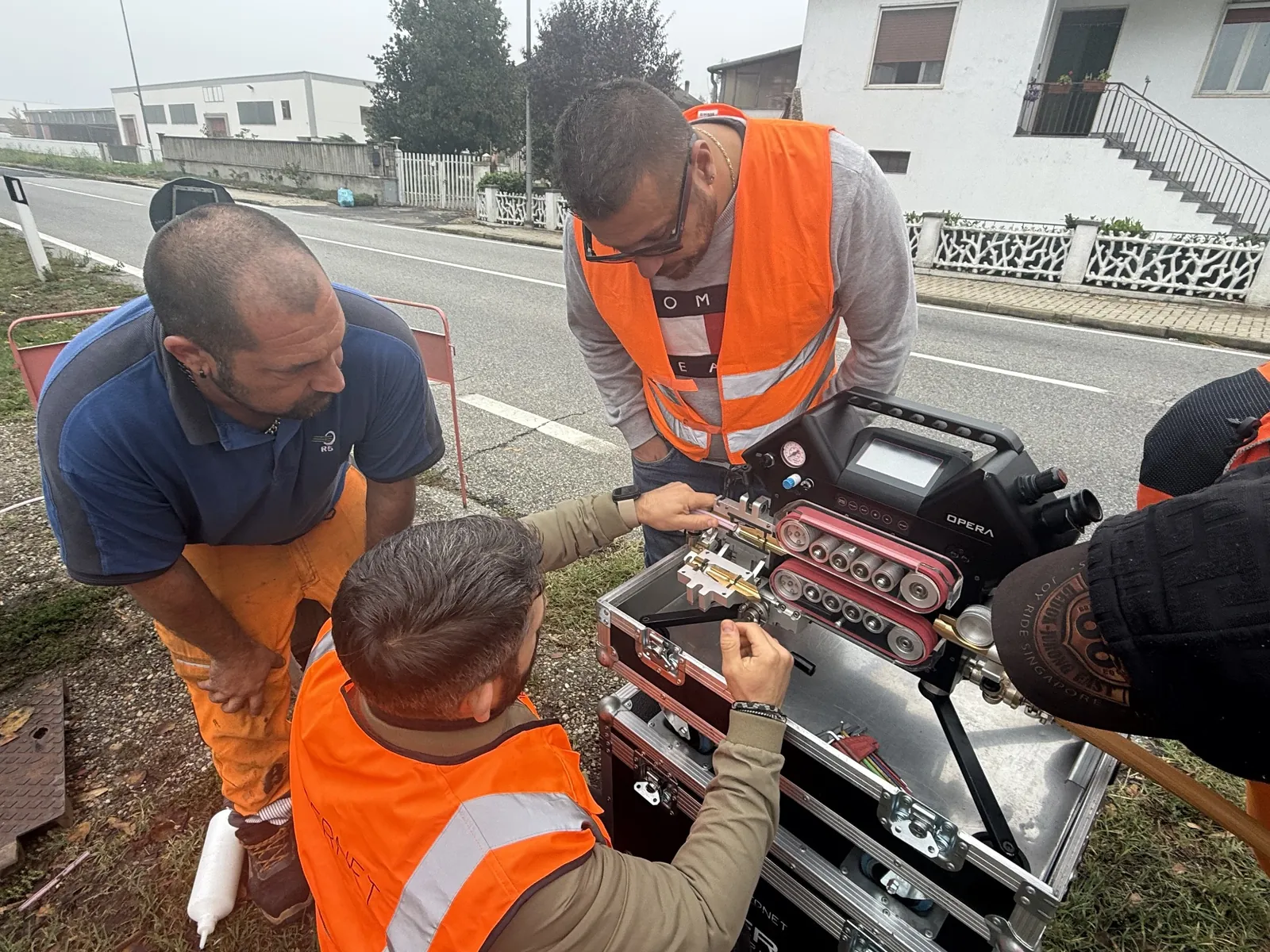
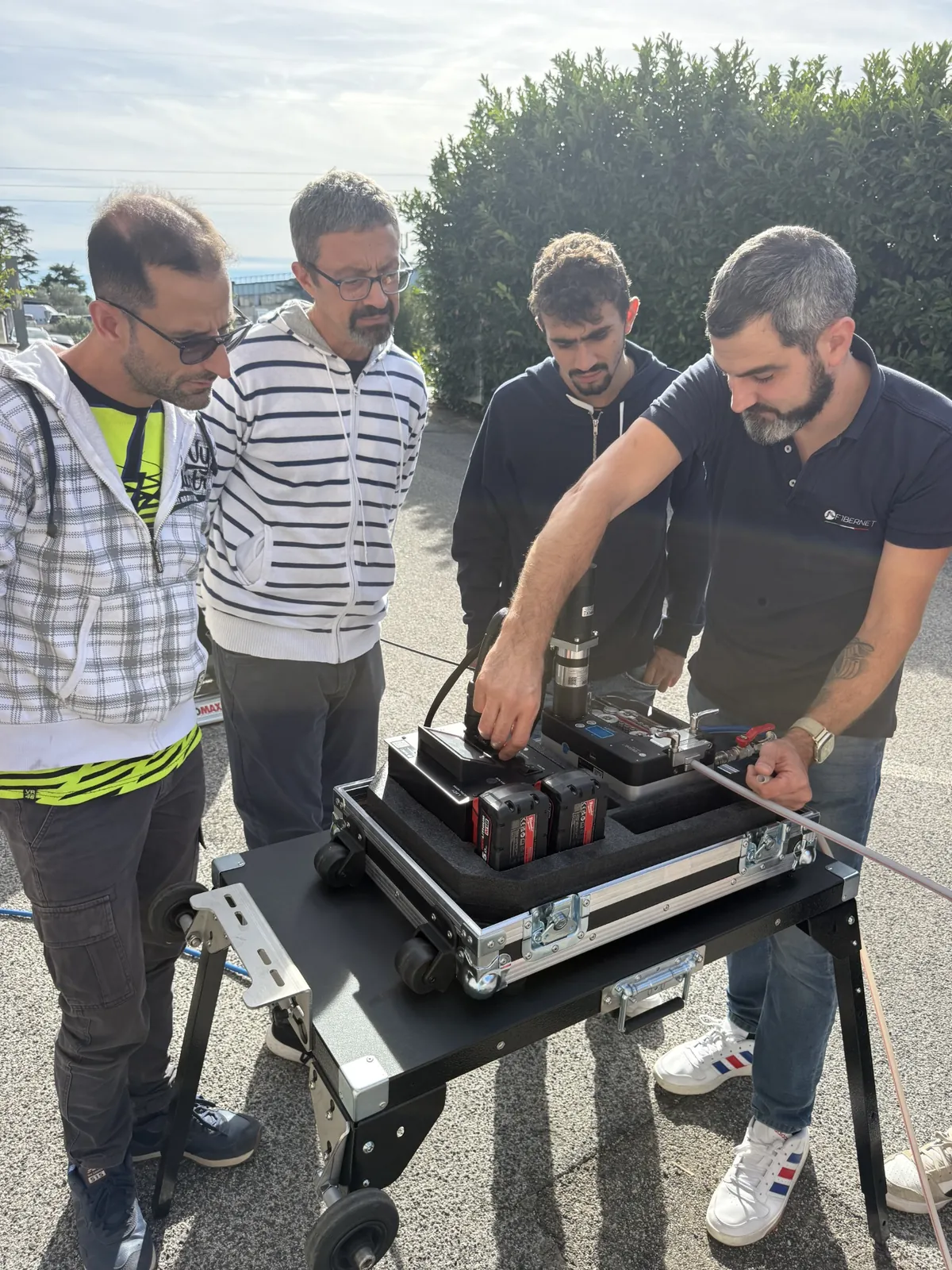
Read on Google“An excellent experience on the installer training course. The whole team was professional and knowledgeable.”
Cable blowing machines · Made in Italy
From last-mile connections to long-distance runs, a Fibernet technician can help you choose the right machine for your fiber optic cable installation.
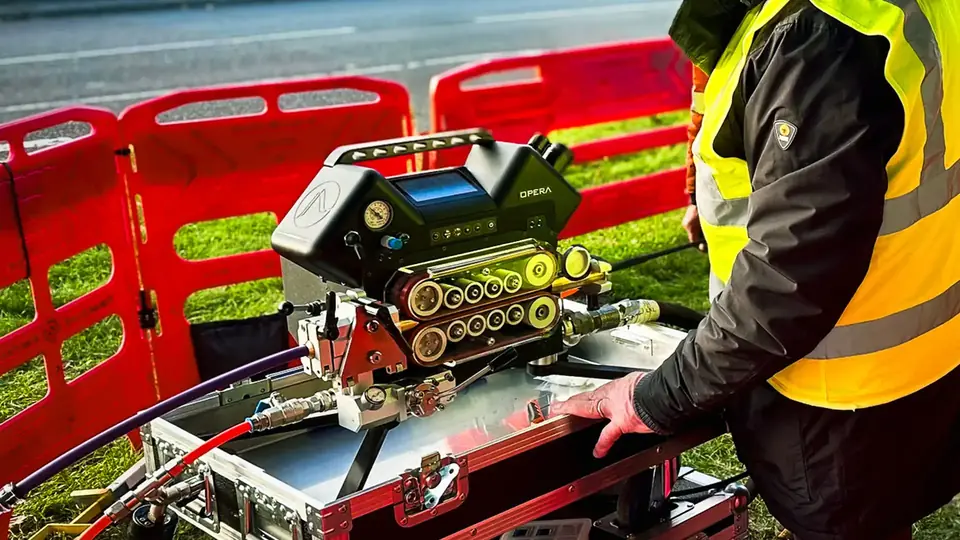
Opera, image 1 of 3
Expert advice direct from the manufacturer / Free demonstration on request
Some of our customers.

Keep your installation moving with Fibernet cable blowing machines.
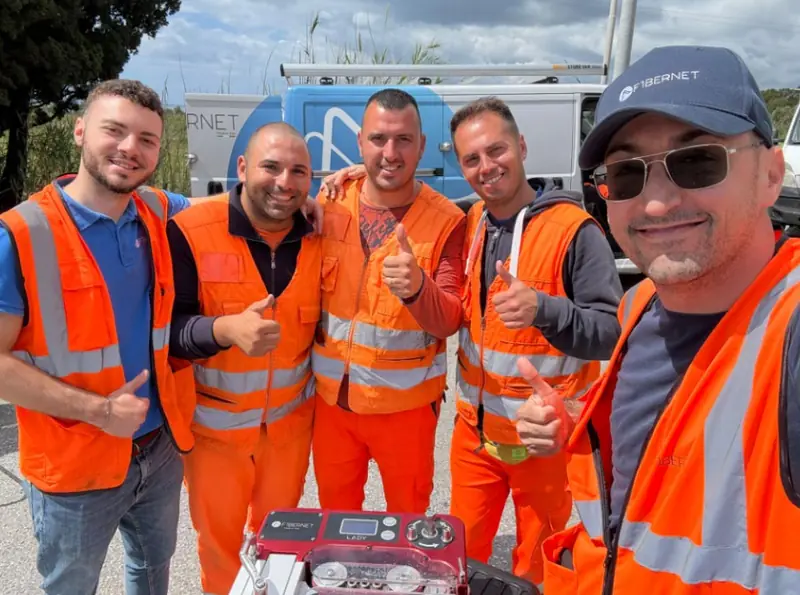
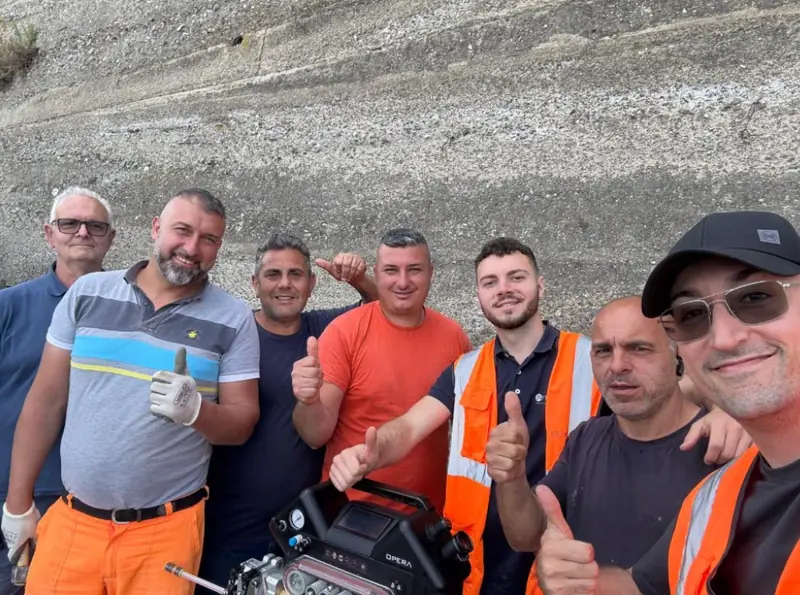
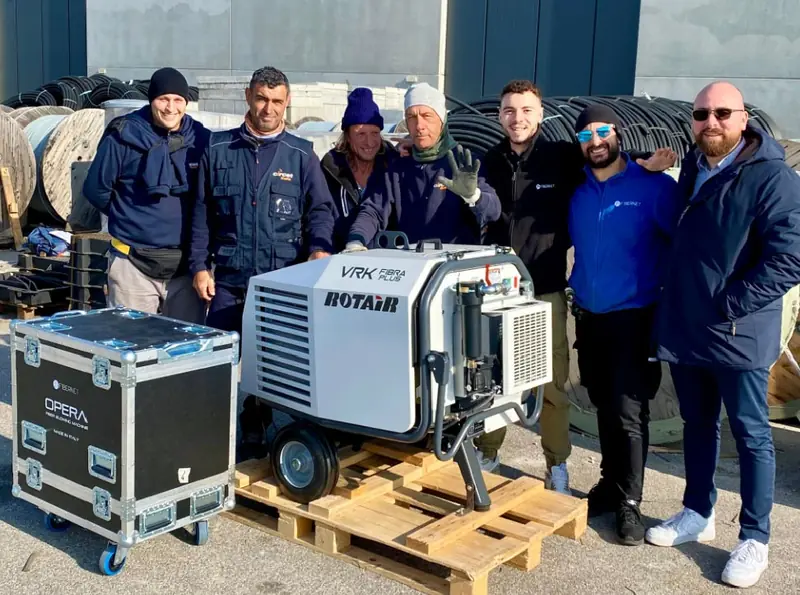
Photos and stories from installers, published by Fibernet.
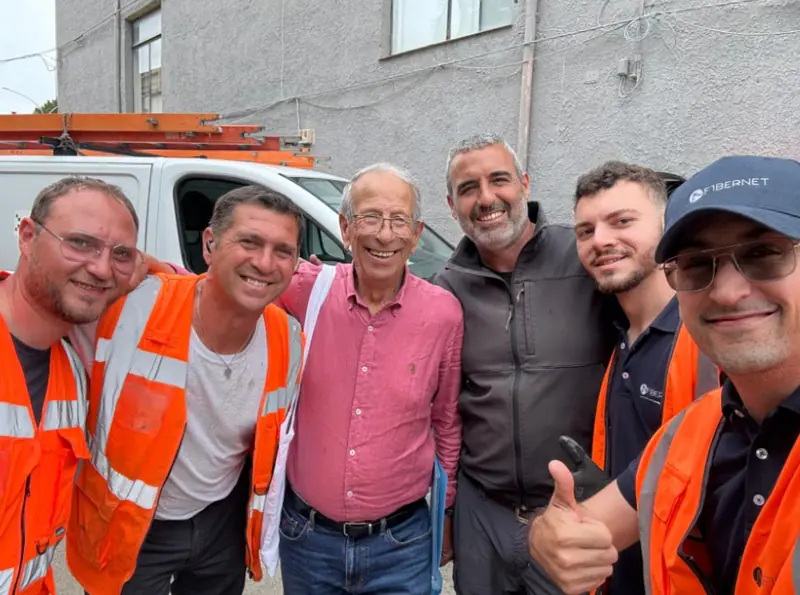
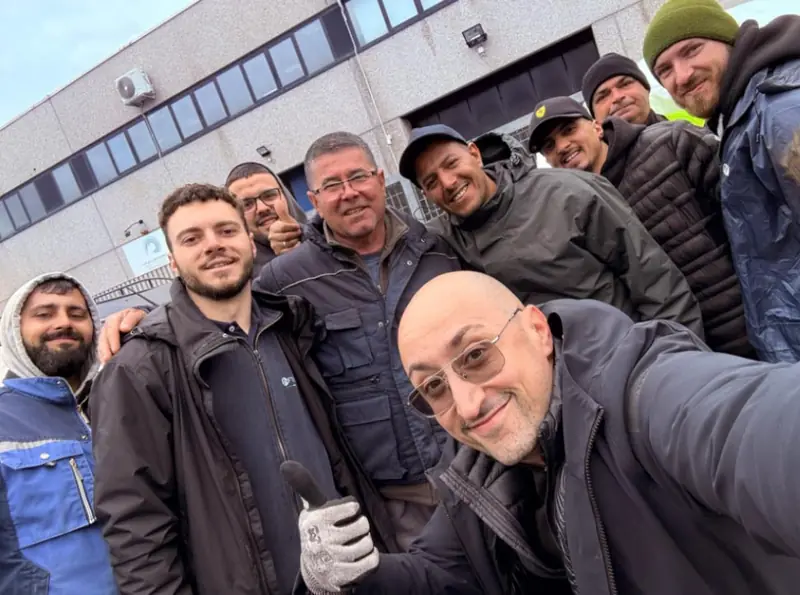
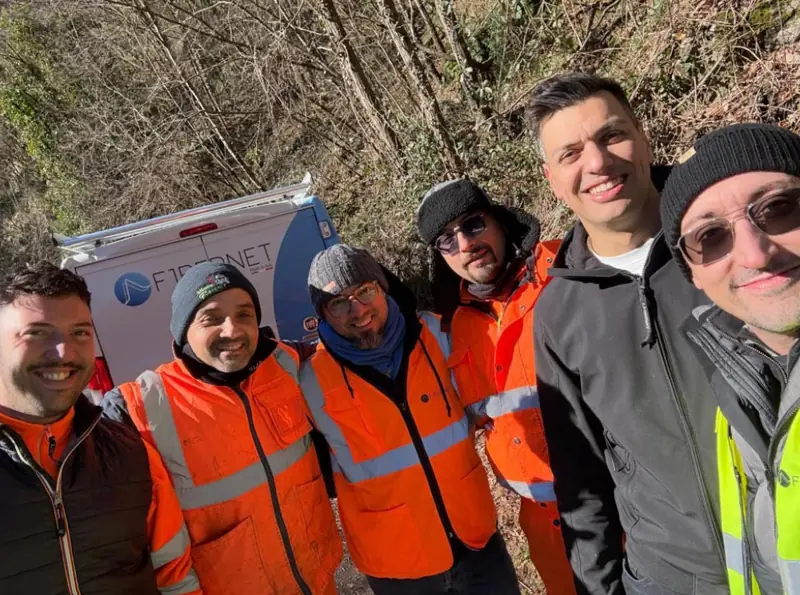 GoogleExcellentBased on 176 reviewsRead the reviews
Read on Google“An excellent experience on the installer training course. The whole team was professional and knowledgeable.”
Read on Google“I had the chance to try the Opera cable blowing machine on site…”
Read on Google“I really enjoyed this course. It took place in a pleasant setting with friendly, helpful people.”
Stories from installers
Hear the results from the installers themselves. Watch their testimonials right here.
Product videos
Three machines. Find your fit.
Start with the job at hand. Our technician can answer your questions about the right setup.
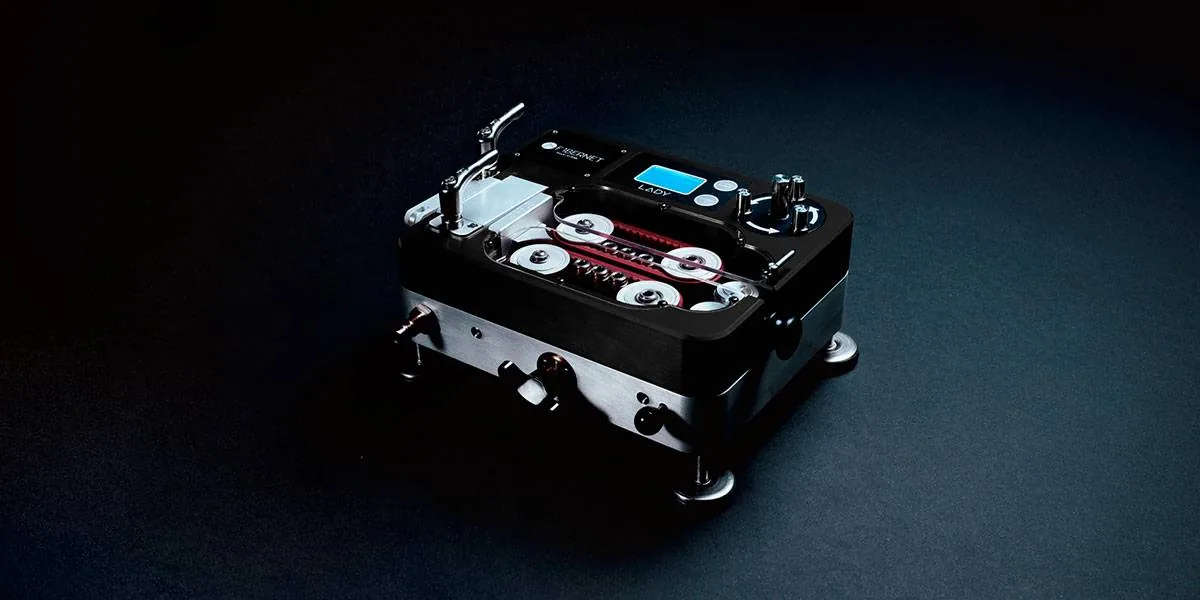
Compact and lightweight
A compact, lightweight machine for short runs.
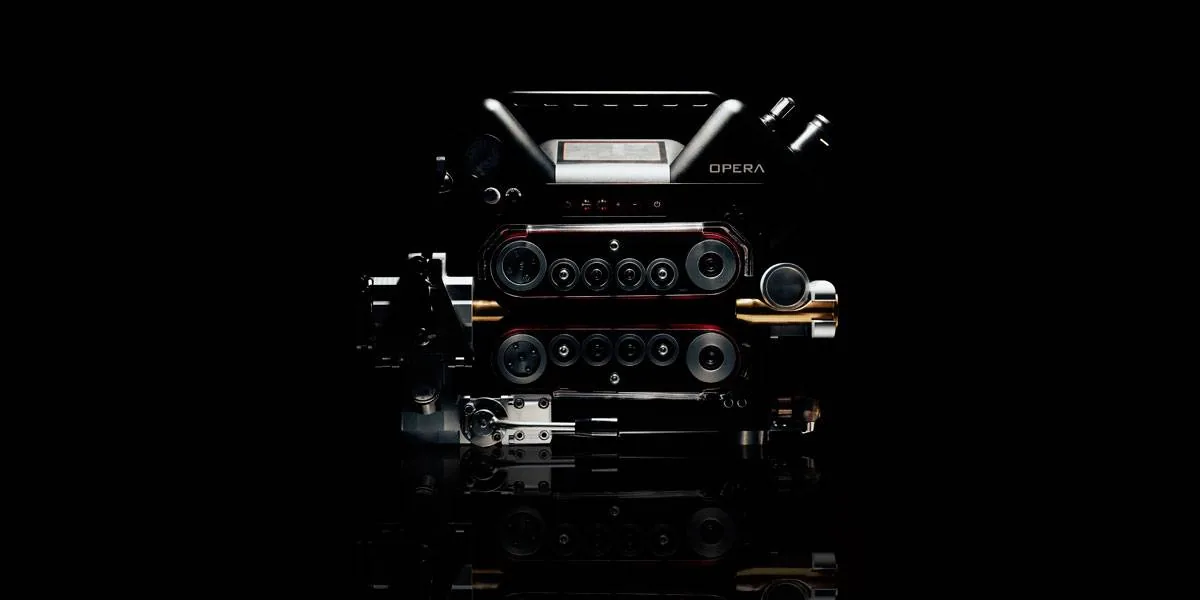
Pneumatic power
A pneumatic machine for long cable runs.
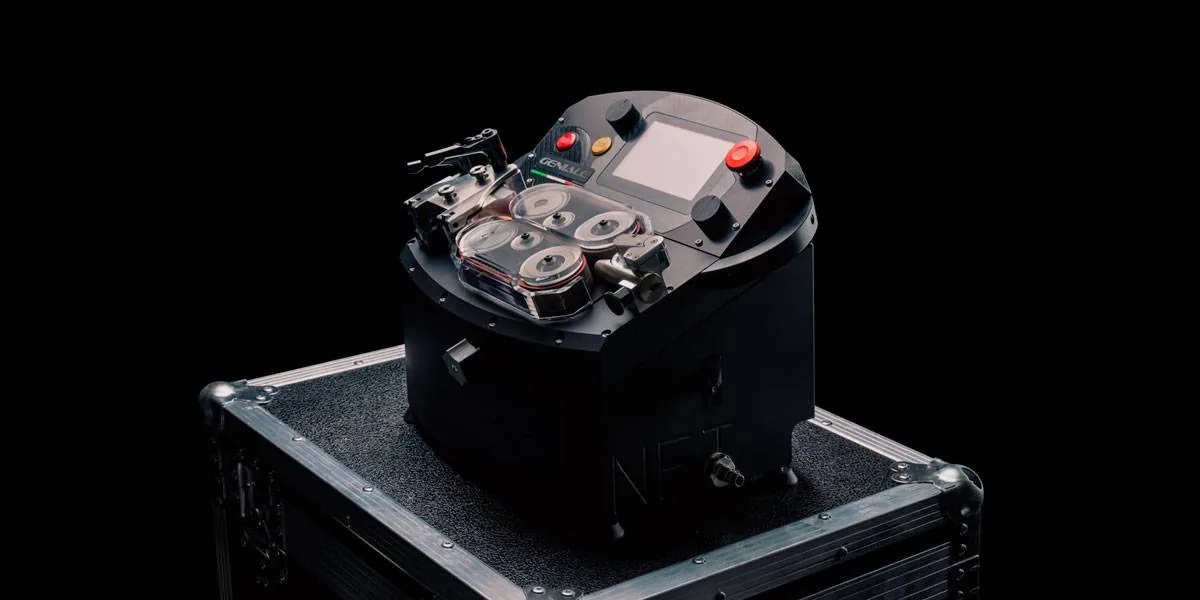
Electric, with two gears
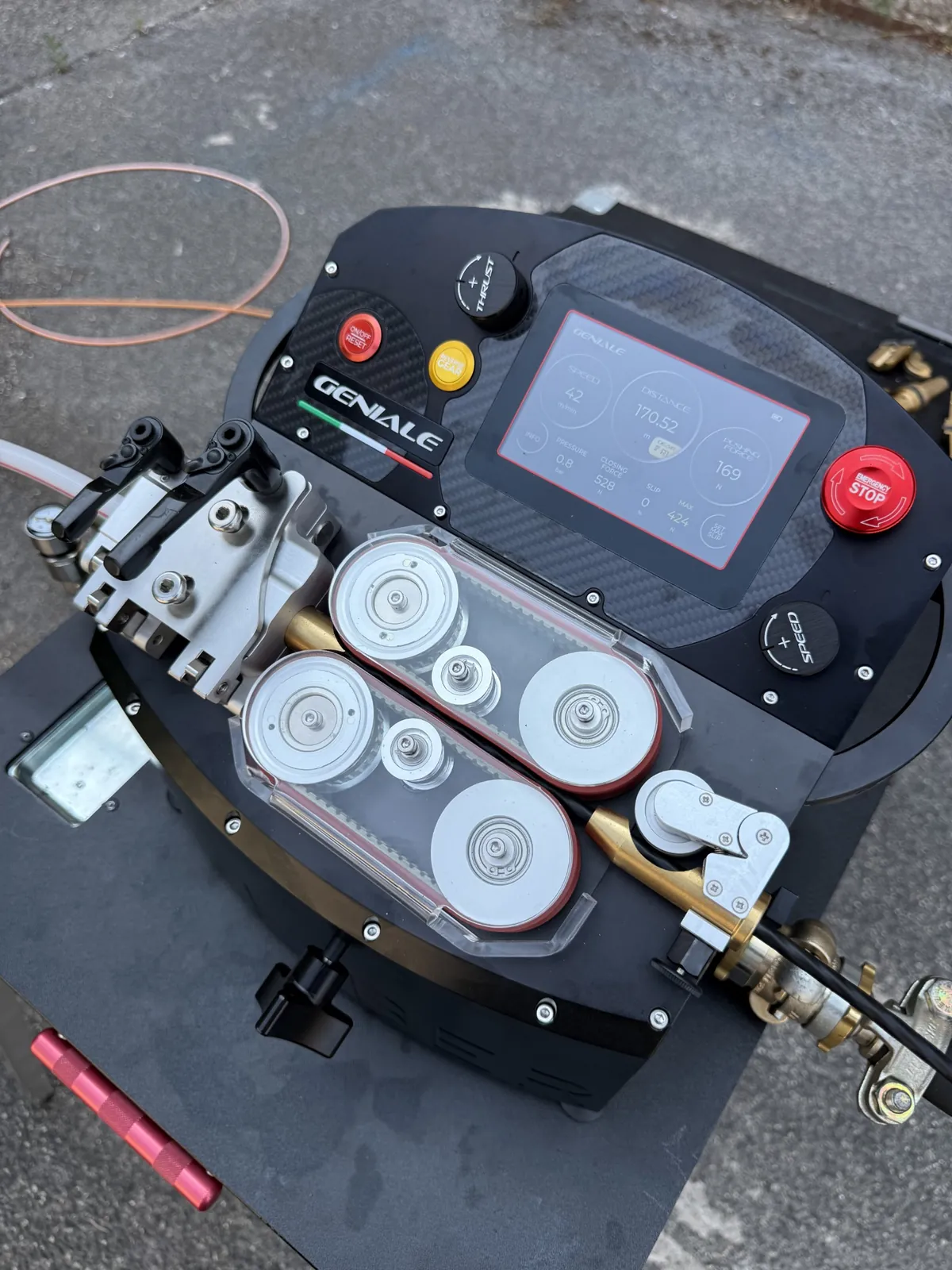
For short and long runs. Two gears let you match force and speed to the job.
Specifications for the Fibernet range. The speeds shown are maximum values. Actual results depend on installation conditions and machine setup.
Direct from the manufacturer
When you’re working on site, you need practical answers. With Fibernet, you speak directly to the people who design and build your cable blowing machine.
Speak to a technicianA specialist technician can help when you need it.
Spare parts ready to ship, direct from the manufacturer.
If your machine breaks down, a replacement may be available within 48 hours.
Check availability and terms with your technician.Get help making the most of your machine, from your very first job.
See it in action before you choose
Request a free hands-on demonstration on your site or at Fibernet’s test facility. Discuss a real job with the technician.
Request a free demonstration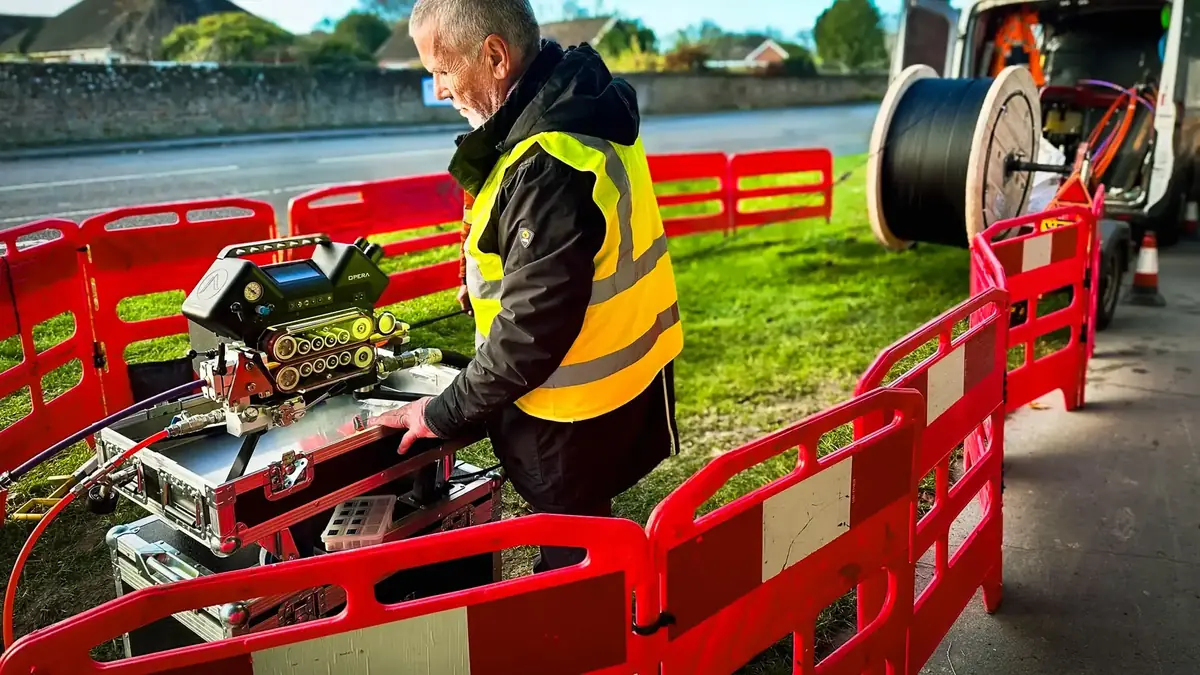
Choosing a battery powered fiber optic cable jetting machine starts with understanding the installation rather than comparing power sources in isolation. Contractors working on duct routes in Italy need equipment that suits the cable, the available access points, and the conditions inside the duct. Battery operation can offer greater flexibility where a convenient electrical connection is unavailable, but it does not automatically eliminate other supporting equipment. In an air-assisted installation, the drive system advances the cable while compressed air helps carry it through the duct. Before selecting a configuration, establish which functions use battery power and what external air supply the proposed setup requires. For a meaningful equipment discussion, prepare the cable outside diameter, duct internal diameter, planned section lengths, and information about bends, joints, and changes in elevation. Cable stiffness, jacket characteristics, and the manufacturer's installation limits also matter. A route that appears straightforward on a drawing can behave differently when residual moisture, contamination, or poorly aligned duct connections increase resistance. Checking duct continuity and condition before bringing the machine into operation helps prevent avoidable interruptions and gives the crew a clearer basis for choosing settings. A battery powered fiber optic cable blowing machine should therefore be assessed as part of a complete working arrangement, not as a standalone shortcut to longer installation distances. Ask how the selected cable is guided, how the drive contact is adjusted, and which components must change when moving between cable sizes. Confirm how the operator can monitor progress and stop the feed if resistance rises unexpectedly. These questions are more useful than relying on an advertised maximum distance without knowing the conditions behind it. Battery planning deserves the same attention. Establish the expected workload, charging opportunities, replacement battery arrangements, and any operating limitations stated in the equipment documentation. Where several access points must be served during one shift, the practical issue is whether the complete setup can move efficiently between them without leaving essential accessories behind. Fibernet's technical background provides a relevant starting point for this conversation. Founded in 2001, the company introduced its first cable blowing machine, Lady, in 2021. Its development story is rooted in practical installation experience and Italian engineering. When comparing a battery powered cable jetting machine for an upcoming project, ask Fibernet to confirm the current configuration, compatible dimensions, required accessories, and support arrangements. This approach keeps the discussion focused on documented suitability. It also helps purchasing teams and site supervisors agree on what the equipment must accomplish before an order is placed, reducing uncertainty when the machine reaches the installation site.
An efficient installation depends on what happens before the first meter of cable enters the duct. Place the machine on a stable working surface, arrange the cable supply to unwind freely, and keep the entry path aligned with the feed mechanism. Avoid introducing unnecessary bends immediately before the machine, because resistance at the entry can make the overall process harder to assess. The crew should inspect the cable contact surfaces, guiding components, duct connection, and seals according to the equipment instructions. A worn or incorrectly matched component can undermine otherwise careful preparation. With a battery powered fiber optic cable jetting machine, setup checks should also include the battery condition, secure connections, and the manufacturer's requirements for safe charging and handling. Operators must understand the distinction between driving the cable and supplying the airflow used for jetting. Electrical independence for one function does not establish that the entire installation process is independent of a compressor. Where compressed air is required, confirm the specified pressure and flow, the suitability of the connecting hose, and any air treatment requirements before starting work. A compressed air fiber optic cable jetting machine can only perform consistently when the supporting air supply matches the application. Neither excessive pressure nor aggressive feeding is a reliable answer to an obstruction. Begin with the operating procedure specified for the selected equipment and cable. Watch the cable supply, the machine entry, and the behavior of the feed throughout the installation. If progress changes unexpectedly, stop and investigate rather than increasing force without understanding the cause. Possible causes include a restricted duct, an unsuitable connection, excessive reel resistance, or a cable path that needs correction. Protecting the cable means respecting its permitted installation loads and bend limits at every stage, including outside the duct. For contractors completing repeated sections, a simple installation record can improve consistency. Record the cable and duct dimensions, route characteristics, equipment configuration, relevant settings, and any interruptions. These notes help distinguish a machine setup issue from a route-specific problem and make technical support conversations more productive. They also help the next crew avoid repeating an unsuccessful approach. Selecting a cable jetting machine for fiber optic cable installation should therefore include a discussion of routine checks, component changes, cleaning, and accessible maintenance guidance. Ask Fibernet which procedures apply to the proposed configuration and which consumable or replacement items should accompany it. For projects in Italy, establish the contact process and practical service arrangements before deployment. A clear preparation routine cannot guarantee a particular installation distance, but it can reduce avoidable variability and help crews make better decisions when field conditions differ from expectations.
The purchase decision should account for the full working life of the equipment, not simply the initial quotation. A battery powered fiber optic cable jetting machine needs to fit the contractor's normal cable sizes, deployment pattern, maintenance resources, and expected workload. An attractive purchase figure can become less useful if essential adapters, batteries, charging equipment, or air connection components are missing from the proposed package. Request an itemized quotation that identifies the machine configuration, included accessories, optional components, and any supporting equipment that must be sourced separately. This makes comparisons more meaningful and helps avoid assumptions about what will arrive on site. When reviewing fiber optic cable jetting machine price, distinguish confirmed technical capabilities from general promotional claims. Ask which cable and duct dimensions are supported by the quoted setup and whether changing sizes requires additional parts. Discuss the working conditions behind any performance figures, including the route, cable characteristics, and air supply. No supplier can responsibly turn a distance achieved under one set of conditions into a guarantee for every duct route. The most useful quotation connects the proposed equipment to a clearly described application. Battery-related ownership costs also deserve attention. Clarify the available battery configuration, charging requirements, replacement arrangements, and applicable warranty terms. Confirm how the equipment should be stored between projects and which checks are recommended after transport or extended inactivity. If several crews will share the machine, establish responsibility for inspections, accessory inventories, and reporting wear. These operational details influence availability just as directly as the choice of power source. Fibernet brings an identifiable Italian history to this evaluation. Founder Giancarlo Trinei began working with fiber installations in the early 1980s, and the company was established in 2001. The next generation joined the business in 2010, continuing its development while retaining its family foundations. The introduction of Lady in 2021 marked the launch of Fibernet's first cable blowing machine. For buyers evaluating equipment made in Italy, that background provides context, while the final decision should still rest on current specifications and a suitable service agreement. Discuss support for projects in Italy and ask about assistance arrangements for deployments in the United States or elsewhere worldwide. Confirm contact channels, spare parts availability, troubleshooting requirements, and the process for any repair assessment. If comparing an electric fiber optic cable jetting machine with a battery-driven configuration, use the same installation requirements for both proposals. The objective is not to choose a power source in the abstract. It is to obtain a documented equipment package that supports the crew's working method, protects the cable, and remains practical to maintain throughout its service life.
Fill out the form and discover what Fibernet Srl can do for you!
Contact us!Before you get started
If you prefer, speak to us directly.
+39 346 652 9915Compare the cable diameter, duct diameter and installation distance. Lady is compact and lightweight for short runs. Opera is pneumatic and designed for long runs. Geniale is electric and handles both. A Fibernet technician can help you choose.
Yes. You can request a free hands-on demonstration on your site or at Fibernet’s test facility. Tell us what you need in the form and a technician will arrange it with you. Request a demonstration.
To get a price, contact a Fibernet advisor using the form or call +39 346 652 9915.
Fibernet offers direct technical support, spare parts ready to ship and dedicated training. If your machine breaks down, a replacement may be available. Ask your technician about availability and terms.
Tell us about your job. We’ll help you find the right cable blowing machine.