Emanuele Zanda
Google review
★★★★★
Read on Google“An excellent experience on the installer training course. The whole team was professional and knowledgeable.”
Cable blowing machines · Made in Italy
From last-mile connections to long-distance runs, a Fibernet technician can help you choose the right machine for your fiber optic cable installation.
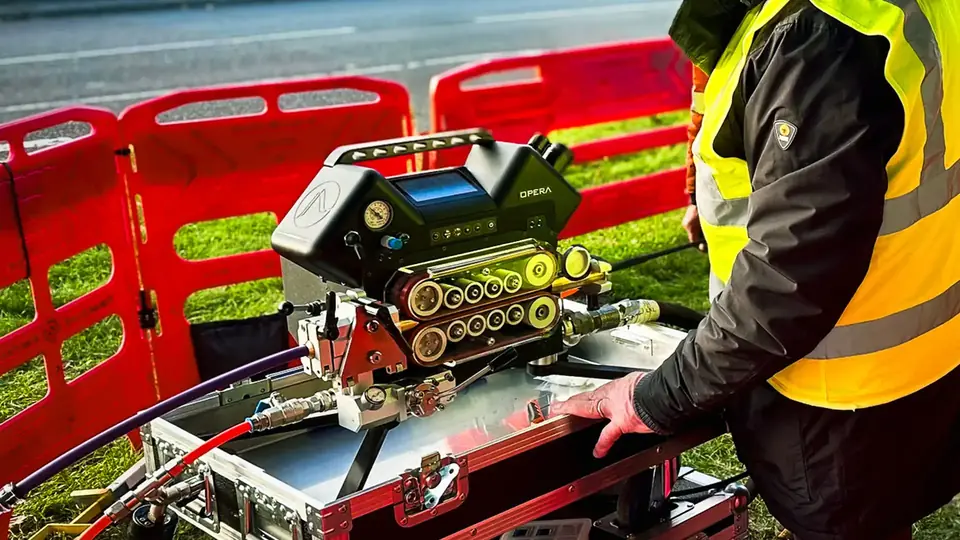
Opera, image 1 of 3
Expert advice direct from the manufacturer / Free demonstration on request
Some of our customers.

Keep your installation moving with Fibernet cable blowing machines.
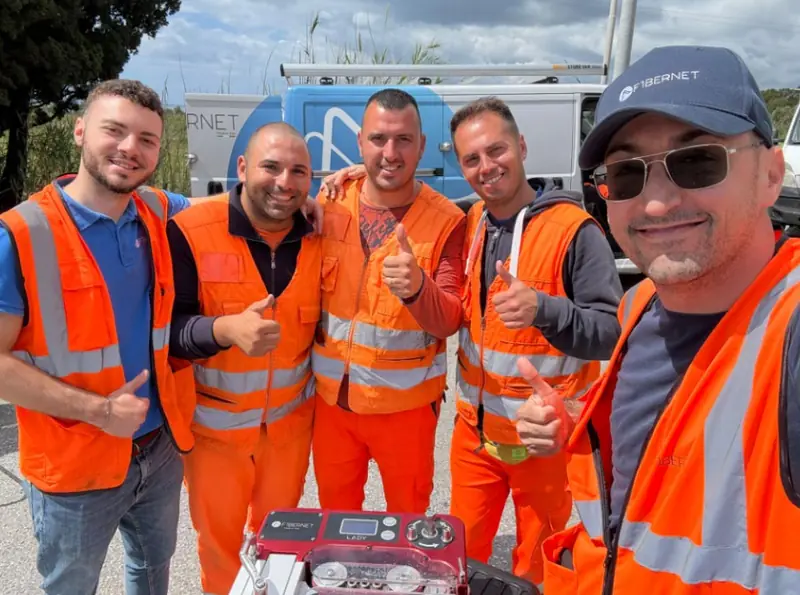
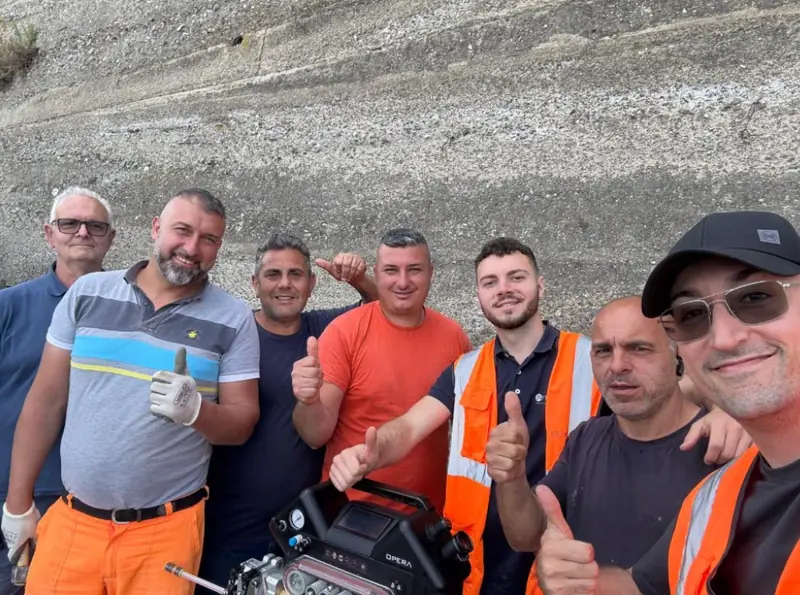
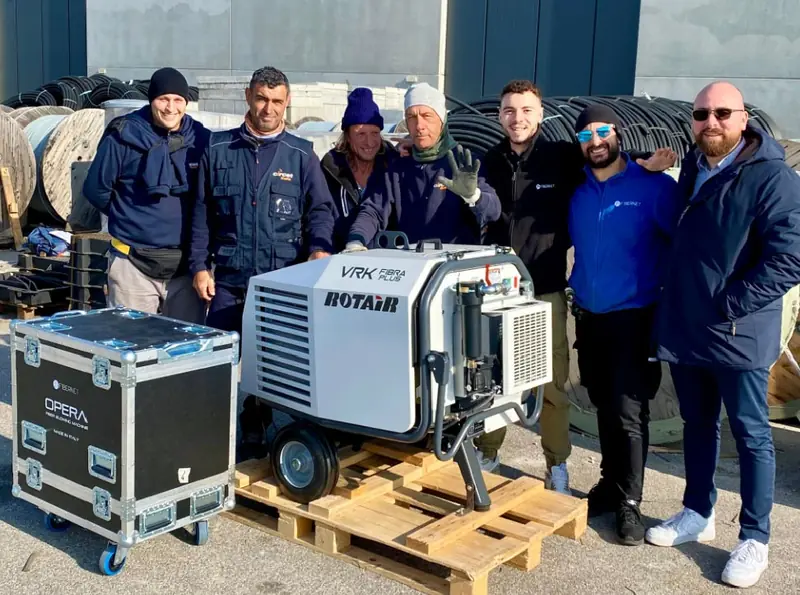
Photos and stories from installers, published by Fibernet.

 GoogleExcellentBased on 176 reviewsRead the reviews
Read on Google“An excellent experience on the installer training course. The whole team was professional and knowledgeable.”
Read on Google“I had the chance to try the Opera cable blowing machine on site…”
Read on Google“I really enjoyed this course. It took place in a pleasant setting with friendly, helpful people.”
Stories from installers
Hear the results from the installers themselves. Watch their testimonials right here.
Product videos
Three machines. Find your fit.
Start with the job at hand. Our technician can answer your questions about the right setup.
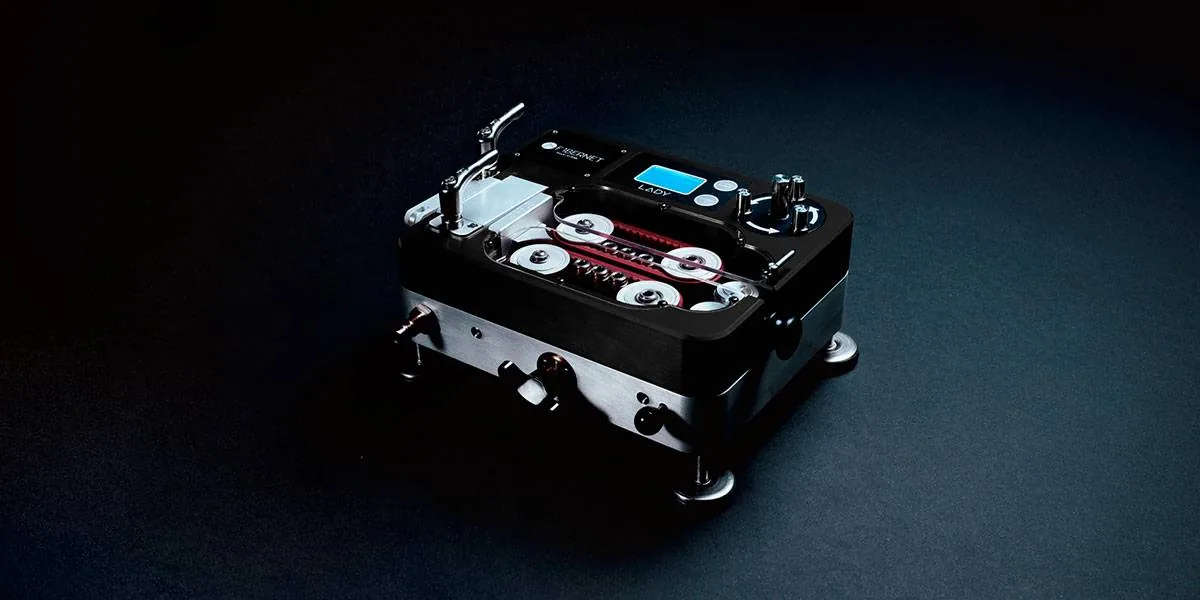
Compact and lightweight
A compact, lightweight machine for short runs.
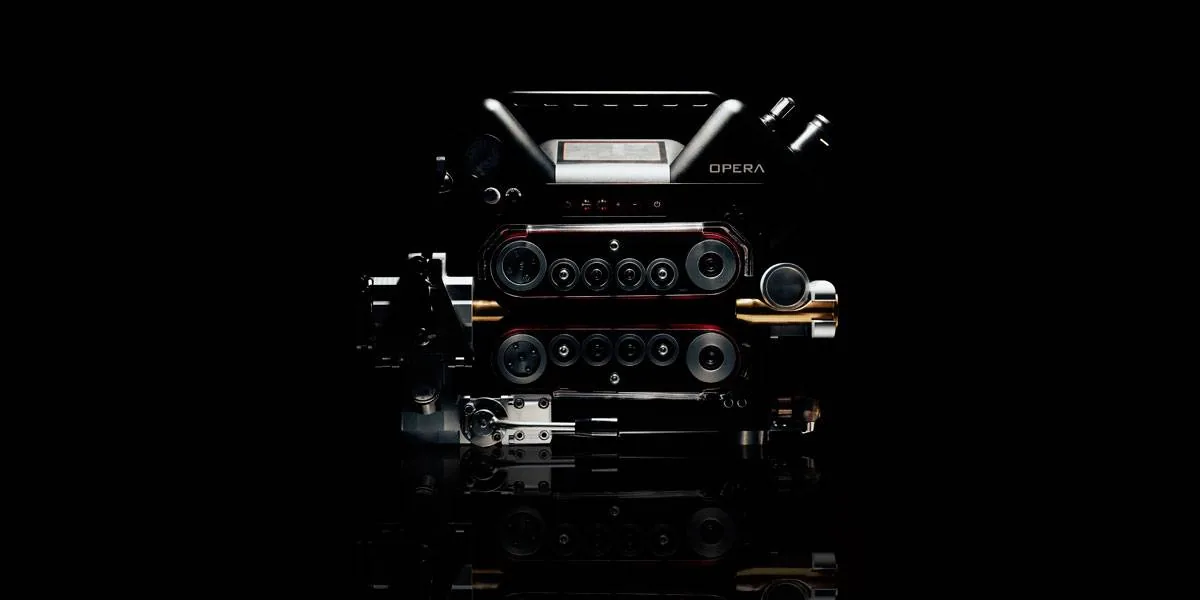
Pneumatic power
A pneumatic machine for long cable runs.
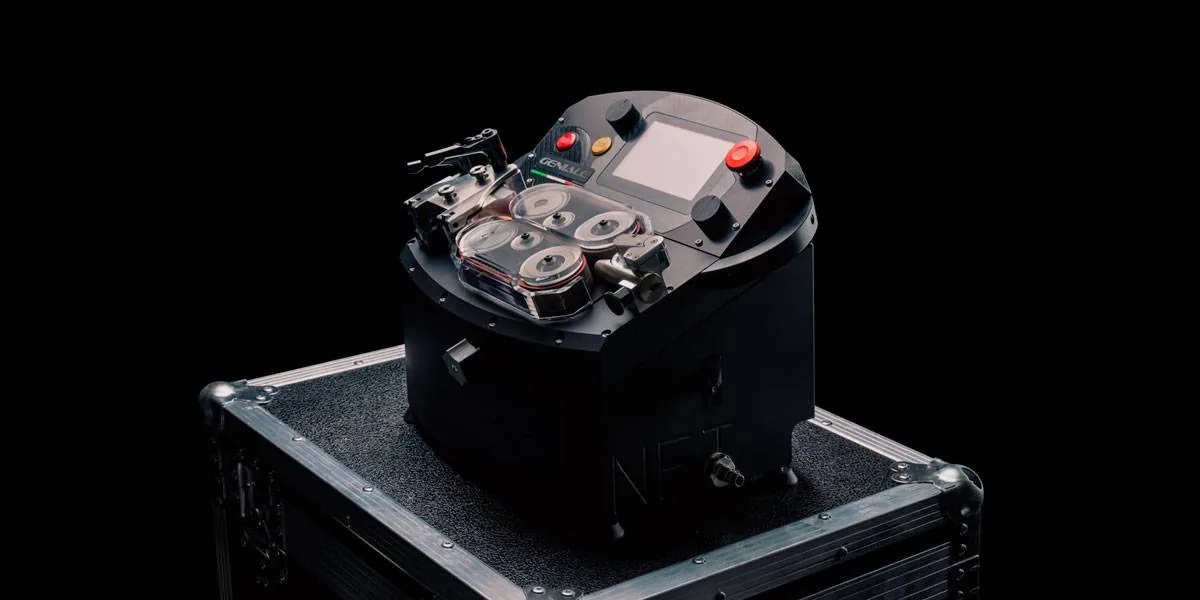
Electric, with two gears
For short and long runs. Two gears let you match force and speed to the job.
Specifications for the Fibernet range. The speeds shown are maximum values. Actual results depend on installation conditions and machine setup.
Direct from the manufacturer
When you’re working on site, you need practical answers. With Fibernet, you speak directly to the people who design and build your cable blowing machine.
Speak to a technicianA specialist technician can help when you need it.
Spare parts ready to ship, direct from the manufacturer.
If your machine breaks down, a replacement may be available within 48 hours.
Check availability and terms with your technician.Get help making the most of your machine, from your very first job.
See it in action before you choose
Request a free hands-on demonstration on your site or at Fibernet’s test facility. Discuss a real job with the technician.
Request a free demonstration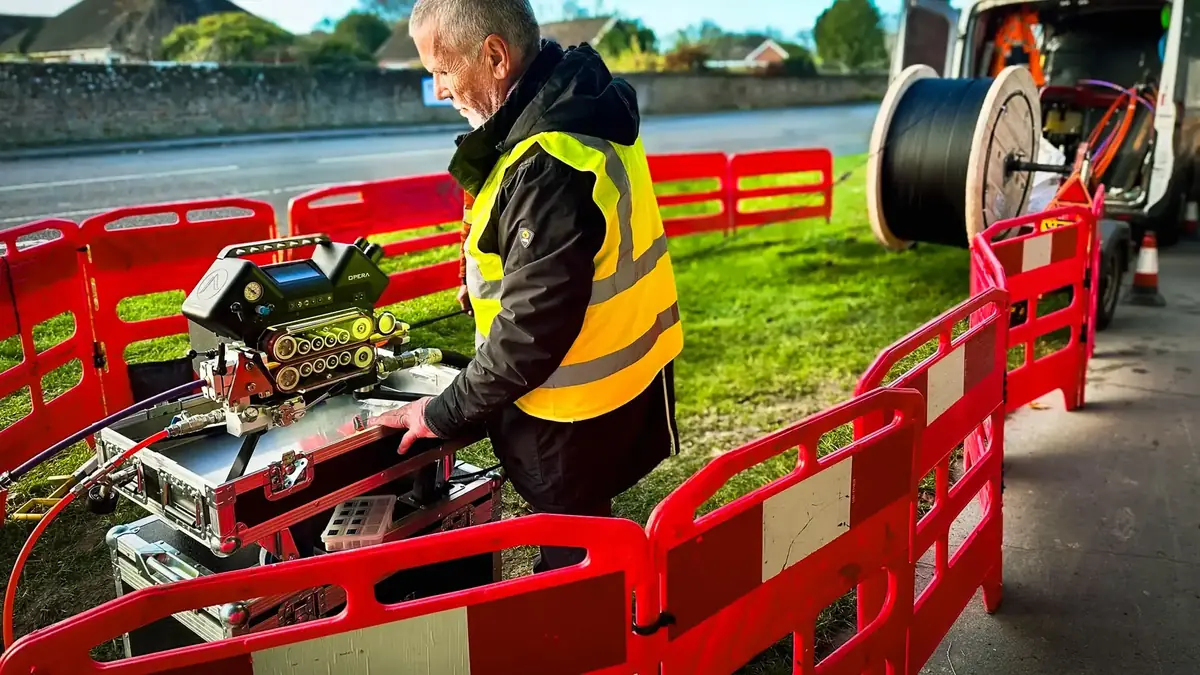
Choosing a battery powered fibre blower starts with understanding the cable, duct and working conditions your crew will encounter, rather than selecting equipment by a headline speed alone. For contractors installing cable in Italy, including American companies coordinating local projects, a useful assessment begins with cable outside diameter, duct internal diameter, route length and the number of changes in direction. These details influence how readily a cable can advance and how carefully the feeding mechanism must be adjusted. Fibernet develops cable blowing machines with a practical engineering background and Italian manufacturing expertise. Its first cable blowing machine, Lady, was launched in 2021. To identify an appropriate configuration, share your project requirements with the company and request confirmation of the current equipment specifications, compatible accessories and operating limits before making a purchasing decision. A battery powered fibre cable blower should also be evaluated as part of the complete installation setup. Battery power may operate the feeding mechanism, but it does not automatically eliminate the need for a suitable compressed air supply. Ask which functions are battery driven, what power source is required and what compressor characteristics apply to the proposed configuration. Airflow, pressure and air quality must match the machine documentation and the installation requirements; none should be assumed from the product category alone. On site, this distinction matters because an otherwise convenient portable arrangement can still underperform if the air supply is unsuitable or the duct has unresolved leakage. Before introducing the cable, crews should check duct continuity, inspect accessible connections and follow the specified preparation procedure. The cable drum should allow controlled payout without introducing avoidable resistance, while the machine should be positioned to maintain a sensible entry path. A battery powered cable blower can be considered for projects involving repeated setup changes, but its suitability depends on verified handling characteristics, power requirements and the actual installation environment. Ask Fibernet about the dimensions, weight and transport arrangements of the available configuration rather than assuming that every battery driven machine offers the same portability. Also discuss the cable contact components, adjustment method and any protective functions supplied with the equipment. Correct setup should support controlled feeding without exceeding the cable manufacturer's limits. For procurement teams, the most useful outcome is a documented match between the proposed machine and the planned work. Send representative cable and duct specifications, explain the expected site conditions and request a quotation that identifies the included components. This approach makes it easier to compare alternatives, plan the supporting equipment and give field crews clear operating information before the machine reaches the job site.
A productive cable blowing shift depends on preparation, observation and adjustment throughout the installation. Before deploying a battery powered fibre blower, the crew should review the machine instructions alongside the cable and duct specifications, then establish who controls the feed, who watches the drum and how the team will communicate. Even on a short route, poor coordination can create unnecessary stops or allow resistance to increase unnoticed. Positioning matters: keep the cable supply aligned with the entry point, avoid sharp approach angles and provide enough working space to inspect the feeding area safely. Confirm that the duct connection and sealing components are appropriate for the selected cable and tube dimensions. These checks are particularly valuable when a contractor moves between sites where duct sizes, access arrangements and installation lengths change during the same week. Battery planning deserves its own assessment. Ask Fibernet to confirm the supported power arrangement, battery compatibility where applicable, charging requirements and any operating restrictions for the equipment under consideration. Runtime cannot be responsibly predicted from the words battery powered alone. It can vary with the drive system, battery condition, mechanical load, operating settings and environmental conditions. Where spare batteries are supported, include their handling and charging arrangements in the daily work plan. Keep chargers and electrical connections protected in accordance with their instructions, and do not treat a battery operated feed mechanism as evidence that every part of the installation is independent of external equipment. Compressed air requirements still need separate verification. Contractors comparing a drill powered fibre blower with other drive arrangements should examine how each proposed configuration controls cable movement and how its operating limits are communicated. A familiar power source is not, by itself, proof of suitability for a particular cable. Request information about the recommended setup, adjustment procedure and response when the cable encounters increasing resistance. During installation, operators should monitor progress and respond to abnormal behavior according to the equipment instructions rather than attempting to overcome every obstruction with greater force. Unexpected slowing may call for checking the cable supply, duct route, connections or preparation, depending on the circumstances. When evaluating a battery powered fibre optic cable blower, consider how clearly the supplier explains these operational decisions. Useful product guidance should help your team understand the relationship between feeding, air assistance and route conditions without promising a fixed distance or speed for every project. After each run, follow the prescribed shutdown and cleaning procedures, inspect wear components and record any recurring difficulties. Keeping notes on cable dimensions, duct characteristics, route conditions and setup choices helps supervisors prepare comparable future jobs. It also gives Fibernet more useful information when your team requests technical assistance or discusses a different equipment configuration.
Purchasing a battery powered fibre blower is a decision about equipment suitability, service access and long term operating costs, not simply the initial quotation. Fibernet was founded in 2001 and draws on the technical experience of founder Giancarlo Trinei, whose work with early fibre installations in Italy began in the 1980s. The company's development of cable blowing equipment brings that background into a specific practical task: helping installers introduce cable into prepared ducts using an appropriate combination of mechanical feeding and air assistance. For buyers seeking a made in Italy product, this history provides useful context, but the purchasing decision should still rest on the documented capabilities of the actual machine being offered. Request current technical information and confirm that the proposed configuration matches your cable range, duct dimensions and expected working conditions. Support arrangements are especially important for American contractors purchasing Italian equipment or coordinating installations across several countries. Discuss assistance for the United States, Italy and other operating locations directly with Fibernet before ordering. Ask which contact channel to use, what information technicians need to investigate a problem and how replacement components are supplied to your destination. Confirm service availability, shipping arrangements and any applicable warranty conditions in writing. These practical questions make the purchase easier to manage without relying on assumptions about response times or local stock. If your crew works in Italy while procurement is handled in the United States, identify the installation location and the purchasing entity clearly so that documentation and delivery arrangements can be checked appropriately. A meaningful fibre blower price comparison should distinguish the machine from the supporting items required to put it into service. Depending on the proposed equipment, these may include cable guides, duct adapters, sealing components, power accessories or other specified parts. Ask the supplier to state what is included, what is optional and which items must be sourced separately. Also consider the cost of compatible compressed air equipment, transport, routine maintenance and consumable replacement. A lower initial figure is not necessarily a better purchase if essential components are missing or the configuration does not suit your regular jobs. When discussing a battery powered fibre blowing machine, explain whether your priority is frequent relocation, a particular cable range or straightforward integration into an existing installation setup. Fibernet can then be asked to clarify which available solution addresses those requirements and where limitations apply. Prepare a concise project brief with representative cable data, duct specifications, typical route conditions and intended destinations. Use that brief to request product guidance and a detailed quotation through www.fibernetsrlusa.com. The objective is a purchase supported by clear specifications, realistic expectations and an agreed path for assistance throughout the equipment's working life.
Fill out the form and discover what Fibernet Srl can do for you!
Contact us!Before you get started
If you prefer, speak to us directly.
+39 346 652 9915Compare the cable diameter, duct diameter and installation distance. Lady is compact and lightweight for short runs. Opera is pneumatic and designed for long runs. Geniale is electric and handles both. A Fibernet technician can help you choose.
Yes. You can request a free hands-on demonstration on your site or at Fibernet’s test facility. Tell us what you need in the form and a technician will arrange it with you. Request a demonstration.
To get a price, contact a Fibernet advisor using the form or call +39 346 652 9915.
Fibernet offers direct technical support, spare parts ready to ship and dedicated training. If your machine breaks down, a replacement may be available. Ask your technician about availability and terms.
Tell us about your job. We’ll help you find the right cable blowing machine.